AI Server Vitals – Magenta Cyberpunk
<div class="fp-machine-learning-server-uptime-monitor-ui">
  <div class="fp-machine-learning-server-uptime-monitor-ui-stage">
    <div class="fp-machine-learning-server-uptime-monitor-ui-grid"></div>

    <div class="fp-machine-learning-server-uptime-monitor-ui-ring"></div>

    <div class="fp-machine-learning-server-uptime-monitor-ui-panel">

      <div class="fp-machine-learning-server-uptime-monitor-ui-header">
        <span class="fp-machine-learning-server-uptime-monitor-ui-title">AI_VITAL // CORE</span>
        <span class="fp-machine-learning-server-uptime-monitor-ui-status">SYNC</span>
      </div>

      <div class="fp-machine-learning-server-uptime-monitor-ui-metrics">
        <div class="fp-machine-learning-server-uptime-monitor-ui-metric" id="fp-ml-metric-tensor">
          <span class="fp-machine-learning-server-uptime-monitor-ui-metric-label">TENSOR_LOAD</span>
          <span class="fp-machine-learning-server-uptime-monitor-ui-metric-value" id="fp-ml-val-tensor">42%</span>
        </div>
        <div class="fp-machine-learning-server-uptime-monitor-ui-metric" id="fp-ml-metric-epoch">
          <span class="fp-machine-learning-server-uptime-monitor-ui-metric-label">EPOCH_CYCLE</span>
          <span class="fp-machine-learning-server-uptime-monitor-ui-metric-value" id="fp-ml-val-epoch">14,930</span>
        </div>
      </div>

      <div class="fp-machine-learning-server-uptime-monitor-ui-eq" id="fp-ml-eq-container">
        </div>

    </div>
  </div>
</div>
.fp-machine-learning-server-uptime-monitor-ui {
/* Layout Variables */
--fp-container-width: 100%;
--fp-max-width: 500px;
--fp-aspect-ratio: 1 / 1;
/* Semantic Color Variables - White Cyberpunk */
--fp-primary-color: #FFFFFF;
--fp-secondary-color: #F0F0F0;
--fp-text-color: #1A1A1A;
--fp-muted-color: #888888;
--fp-soft-color: rgba(255, 0, 255, 0.08);
--fp-background-color: transparent;
--fp-info-color: #00F0FF;
--fp-warning-color: #FF0055;
--fp-danger-color: #FF0000;
--fp-accent-color: #FF00FF;
width: var(--fp-container-width);
max-width: var(--fp-max-width);
margin: 0 auto;
background: var(--fp-background-color);
font-family: 'Courier New', Courier, monospace;
font-weight: bold;
}
.fp-machine-learning-server-uptime-monitor-ui-stage {
aspect-ratio: var(--fp-aspect-ratio);
width: 100%;
background-color: var(--fp-primary-color);
overflow: hidden;
display: flex;
align-items: center;
justify-content: center;
position: relative;
border: 2px solid var(--fp-text-color);
box-shadow: 10px 10px 0px var(--fp-soft-color);
box-sizing: border-box;
}
.fp-machine-learning-server-uptime-monitor-ui-grid {
position: absolute;
inset: -50%;
background-size: 30px 30px;
background-image:
linear-gradient(to right, var(--fp-secondary-color) 1px, transparent 1px),
linear-gradient(to bottom, var(--fp-secondary-color) 1px, transparent 1px);
transform: perspective(600px) rotateX(45deg);
transform-origin: center center;
z-index: 0;
}
.fp-machine-learning-server-uptime-monitor-ui-ring {
position: absolute;
width: 80%;
aspect-ratio: 1 / 1;
border-radius: 50%;
border: 2px dashed var(--fp-text-color);
border-right-color: var(--fp-accent-color);
border-bottom-color: var(--fp-info-color);
z-index: 1;
opacity: 0.15;
animation: fp-machine-learning-server-uptime-monitor-ui-spin 12s linear infinite;
}
.fp-machine-learning-server-uptime-monitor-ui-panel {
position: relative;
z-index: 2;
width: 80%;
height: 80%;
background: var(--fp-primary-color);
border: 3px solid var(--fp-text-color);
display: flex;
flex-direction: column;
padding: 5%;
box-sizing: border-box;
animation: fp-machine-learning-server-uptime-monitor-ui-breathe 3s ease-in-out infinite alternate;
clip-path: polygon(0 0, calc(100% - 24px) 0, 100% 24px, 100% 100%, 24px 100%, 0 calc(100% - 24px));
}
.fp-machine-learning-server-uptime-monitor-ui-header {
display: flex;
justify-content: space-between;
align-items: center;
border-bottom: 2px solid var(--fp-text-color);
padding-bottom: 8px;
margin-bottom: 16px;
}
.fp-machine-learning-server-uptime-monitor-ui-title {
font-size: 1.2rem;
color: var(--fp-text-color);
letter-spacing: -1px;
}
.fp-machine-learning-server-uptime-monitor-ui-status {
background: var(--fp-text-color);
color: var(--fp-primary-color);
padding: 2px 8px;
font-size: 0.8rem;
animation: fp-machine-learning-server-uptime-monitor-ui-blink 2s step-end infinite;
}
.fp-machine-learning-server-uptime-monitor-ui-metrics {
display: grid;
grid-template-columns: 1fr 1fr;
gap: 12px;
margin-bottom: 20px;
}
.fp-machine-learning-server-uptime-monitor-ui-metric {
display: flex;
flex-direction: column;
background: var(--fp-secondary-color);
padding: 8px;
border-left: 3px solid var(--fp-text-color);
transition: border-color 0.2s, background 0.2s;
}
.fp-machine-learning-server-uptime-monitor-ui-metric-label {
font-size: 0.7rem;
color: var(--fp-muted-color);
}
.fp-machine-learning-server-uptime-monitor-ui-metric-value {
font-size: 1.3rem;
color: var(--fp-text-color);
}
.fp-machine-learning-server-uptime-monitor-ui-eq {
flex-grow: 1;
display: flex;
align-items: flex-end;
gap: 4px;
padding-top: 20px;
border-bottom: 2px solid var(--fp-text-color);
}
.fp-machine-learning-server-uptime-monitor-ui-bar {
flex: 1;
background-color: var(--fp-text-color);
height: 10%;
min-height: 2px;
transition: height 0.1s ease-out, background-color 0.1s ease-out;
}
@keyframes fp-machine-learning-server-uptime-monitor-ui-breathe {
0% { box-shadow: inset 0 0 0px var(--fp-soft-color); }
100% { box-shadow: inset 0 0 20px var(--fp-accent-color); }
}
@keyframes fp-machine-learning-server-uptime-monitor-ui-spin {
0% { transform: rotate(0deg) scale(1); }
100% { transform: rotate(360deg) scale(1); }
}
@keyframes fp-machine-learning-server-uptime-monitor-ui-blink {
0%, 100% { opacity: 1; }
50% { opacity: 0.4; }
}
@media (max-width: 400px) {
.fp-machine-learning-server-uptime-monitor-ui-title { font-size: 1rem; }
.fp-machine-learning-server-uptime-monitor-ui-metric-value { font-size: 1rem; }
}document.querySelectorAll('.fp-machine-learning-server-uptime-monitor-ui').forEach(root => {
const eqContainer = root.querySelector('#fp-ml-eq-container');
const tensorVal = root.querySelector('#fp-ml-val-tensor');
const epochVal = root.querySelector('#fp-ml-val-epoch');
const metricBoxes = root.querySelectorAll('.fp-machine-learning-server-uptime-monitor-ui-metric');
const numBars = 12;
const bars = [];
let reqId;
let isVisible = true;
let epochCount = 14930;
for (let i = 0; i < numBars; i++) {
const bar = document.createElement('div');
bar.className = 'fp-machine-learning-server-uptime-monitor-ui-bar';
eqContainer.appendChild(bar);
bars.push({ el: bar, targetHeight: 10, currentHeight: 10, velocity: 0 });
}
let lastTime = 0;
let updateTimer = 0;
let spikeTimer = 0;
function animate(time) {
if (!lastTime) lastTime = time;
const delta = time - lastTime;
lastTime = time;
updateTimer += delta;
spikeTimer += delta;
if (updateTimer > 100) {
bars.forEach(bar => { bar.targetHeight = 10 + Math.random() * 40; });
updateTimer = 0;
if (Math.random() > 0.8) {
epochCount += Math.floor(Math.random() * 3);
if (epochVal) epochVal.textContent = epochCount.toLocaleString();
}
}
if (spikeTimer > 2000) {
if (Math.random() > 0.3) {
const spikeIndex = Math.floor(Math.random() * (numBars - 2));
const spikeWidth = 2 + Math.floor(Math.random() * 3);
for(let i = 0; i < spikeWidth; i++) {
if (bars[spikeIndex + i]) {
bars[spikeIndex + i].targetHeight = 85 + Math.random() * 15;
bars[spikeIndex + i].el.style.backgroundColor = 'var(--fp-accent-color)';
}
}
if (tensorVal) tensorVal.textContent = Math.floor(85 + Math.random() * 14) + '%';
metricBoxes[0].style.borderColor = 'var(--fp-accent-color)';
setTimeout(() => {
for(let i = 0; i < spikeWidth; i++) {
if (bars[spikeIndex + i]) bars[spikeIndex + i].el.style.backgroundColor = 'var(--fp-text-color)';
}
metricBoxes[0].style.borderColor = 'var(--fp-text-color)';
if (tensorVal) tensorVal.textContent = Math.floor(20 + Math.random() * 40) + '%';
}, 300);
}
spikeTimer = 0;
}
bars.forEach(bar => {
const diff = bar.targetHeight - bar.currentHeight;
bar.velocity += diff * 0.2;
bar.velocity *= 0.8;
bar.currentHeight += bar.velocity;
bar.el.style.height = `${Math.max(2, Math.min(100, bar.currentHeight))}%`;
});
if (isVisible) reqId = requestAnimationFrame(animate);
}
const observer = new IntersectionObserver((entries) => {
entries.forEach(entry => {
isVisible = entry.isIntersecting;
if (isVisible) {
lastTime = performance.now();
if (!reqId) reqId = requestAnimationFrame(animate);
} else if (reqId) {
cancelAnimationFrame(reqId);
reqId = null;
}
});
});
observer.observe(root);
document.addEventListener("visibilitychange", () => {
if (document.visibilityState === "hidden") {
isVisible = false;
if (reqId) cancelAnimationFrame(reqId);
reqId = null;
} else {
isVisible = true;
lastTime = performance.now();
if (!reqId) reqId = requestAnimationFrame(animate);
}
});
const cleanup = setInterval(() => {
if (!document.body.contains(root)) {
if (reqId) cancelAnimationFrame(reqId);
observer.disconnect();
clearInterval(cleanup);
}
}, 1000);
});
Description
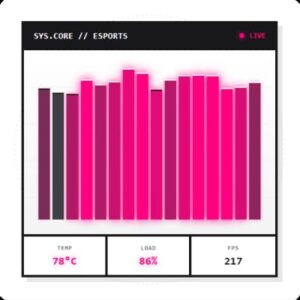
Let us look at the AI Server Vitals Magenta Cyberpunk component. This free UI asset offers a modular card system specifically engineered for the machine learning and AI infrastructure sector. We built this entirely from scratch to handle real time GPU and TPU telemetry without the usual framework bloat. You get a sterile DOM structure that integrates cleanly into your existing model monitoring or data center management architecture.
Machine learning platforms process massive amounts of live inference data and require absolute reliability during heavy compute loads. Heavy client side payloads completely ruin performance metrics when engineers need immediate visual feedback on cluster health. This component solves that bottleneck directly. By strictly avoiding external libraries like Tailwind, Bootstrap, or GSAP, it keeps your bundle size minimal. This ensures rapid rendering for DevOps teams who need to monitor active neural network training sessions on varied network speeds.
Technical Architecture & Performance
-
Zero dependency codebase: Built strictly with pure HTML, CSS, and Vanilla JavaScript to keep your front end stack incredibly light.
-
Guaranteed performance metrics: Optimized to help your ML ops software maintain 90 plus PageSpeed scores and pass Core Web Vitals easily.
-
Safely scoped CSS: All styling is strictly scoped to prevent any class name collisions when you drop these cards into a massive monolithic repository.
-
Sterile DOM markup: Features clean HTML with absolutely no unnecessary wrappers or deep nesting trees to parse.
Design & Aesthetic Impact
The visual direction utilizes bold Neon Magenta tones to establish a high energy and technical environment for the end user. This high contrast and highly readable aesthetic ensures visual clarity for engineers analyzing complex hardware metrics and dense training logs. For the interaction layer, we implemented a custom equalizer bar bouncing animation. This rhythmic visual transition provides clear feedback for live server activity and active compute cycles without requiring heavy javascript animation scripts. The final result is a clean user interface that looks premium and functions perfectly for strict enterprise AI platforms.
Enterprise Use Cases
-
GPU cluster monitoring dashboards: Display active memory usage and temperature levels using the card grid so infrastructure leads can monitor hardware health quickly.
-
Model inference tracking portals: Build a fast rendering analytics page where data scientists can organize and review massive datasets of request latency within a lightweight interface.
-
AI data center command centers: Create a responsive control layout for operations teams to track active cooling efficiency and power consumption across multiple regional server racks.
Highlights & Benefits
Drop the code straight into your project without configuration.
Built strictly with pure CSS & Vanilla JS for maximum speed.
Constructed with strict adherence to WCAG accessibility standards for perfect contrast and screen-reader support.
Utilizes a highly optimized, clean DOM architecture ensuring lightning-fast render and maximum PageSpeed scores.

AI Server Vitals – Magenta Cyberpunk
Description
Let us look at the AI Server Vitals Magenta Cyberpunk component. This free UI asset offers a modular card system specifically engineered for the machine learning and AI infrastructure sector. We built this entirely from scratch to handle real time GPU and TPU telemetry without the usual framework bloat. You get a sterile DOM structure that integrates cleanly into your existing model monitoring or data center management architecture.
Machine learning platforms process massive amounts of live inference data and require absolute reliability during heavy compute loads. Heavy client side payloads completely ruin performance metrics when engineers need immediate visual feedback on cluster health. This component solves that bottleneck directly. By strictly avoiding external libraries like Tailwind, Bootstrap, or GSAP, it keeps your bundle size minimal. This ensures rapid rendering for DevOps teams who need to monitor active neural network training sessions on varied network speeds.
Technical Architecture & Performance
-
Zero dependency codebase: Built strictly with pure HTML, CSS, and Vanilla JavaScript to keep your front end stack incredibly light.
-
Guaranteed performance metrics: Optimized to help your ML ops software maintain 90 plus PageSpeed scores and pass Core Web Vitals easily.
-
Safely scoped CSS: All styling is strictly scoped to prevent any class name collisions when you drop these cards into a massive monolithic repository.
-
Sterile DOM markup: Features clean HTML with absolutely no unnecessary wrappers or deep nesting trees to parse.
Design & Aesthetic Impact
The visual direction utilizes bold Neon Magenta tones to establish a high energy and technical environment for the end user. This high contrast and highly readable aesthetic ensures visual clarity for engineers analyzing complex hardware metrics and dense training logs. For the interaction layer, we implemented a custom equalizer bar bouncing animation. This rhythmic visual transition provides clear feedback for live server activity and active compute cycles without requiring heavy javascript animation scripts. The final result is a clean user interface that looks premium and functions perfectly for strict enterprise AI platforms.
Enterprise Use Cases
-
GPU cluster monitoring dashboards: Display active memory usage and temperature levels using the card grid so infrastructure leads can monitor hardware health quickly.
-
Model inference tracking portals: Build a fast rendering analytics page where data scientists can organize and review massive datasets of request latency within a lightweight interface.
-
AI data center command centers: Create a responsive control layout for operations teams to track active cooling efficiency and power consumption across multiple regional server racks.